
Seven stops, one valley
Stop 1 — Cave
Caverna do Maroaga — The Cathedral Under the Forest
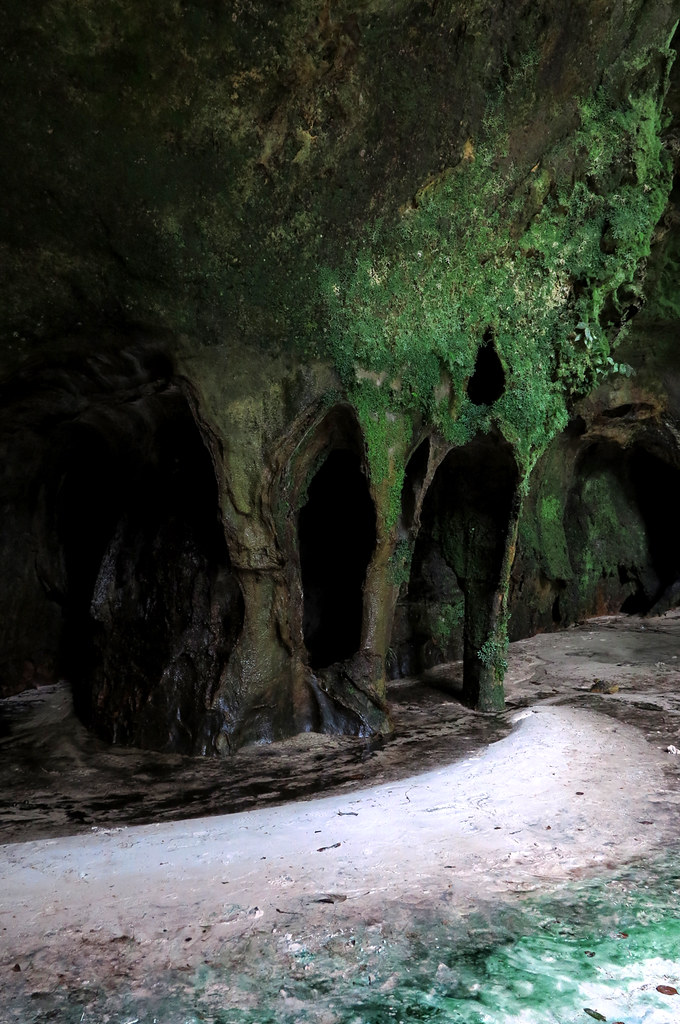
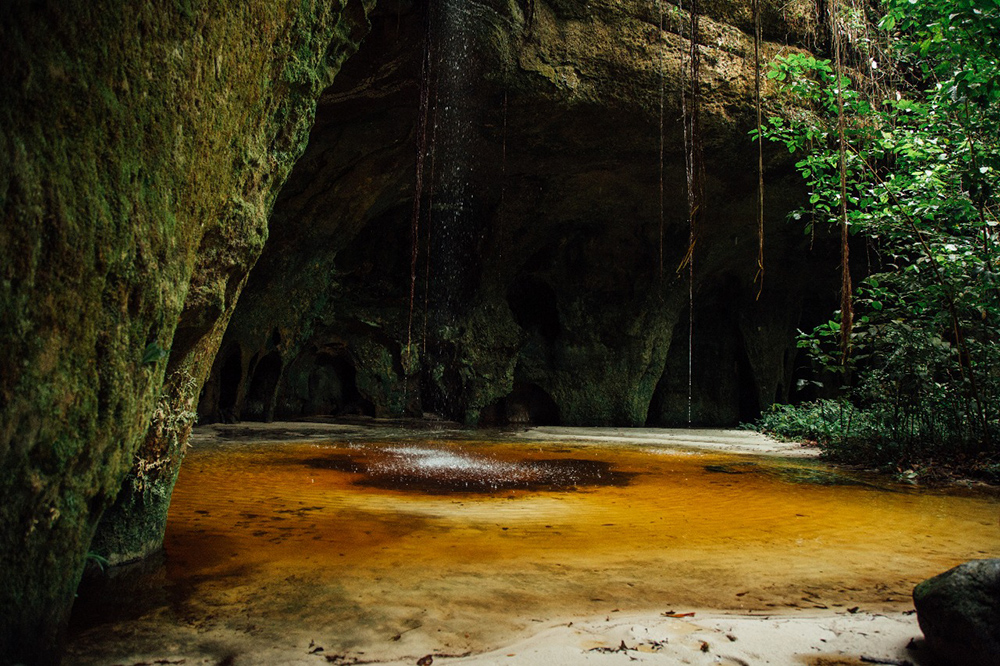
The first stop sets the tone for the day. Caverna do Maroaga sits within the Maroaga Ecological Reserve, a protected area where the main attraction is geological — though in the Amazon, geology and biology are inseparable. Rubber boots are required for the cave floor: white sand and shallow amber water filtered through layers of tannins from the surrounding vegetation.
Inside, sandstone has been sculpted over millennia into arch-like chambers, their walls covered in dense green moss. At the back of the cave, a waterfall drops silently into the amber pool below — a scene of remarkable stillness that photographers regularly spend hours inside. Your guide provides context on the cave formation, the hydrology, and the ecology of the reserve. No group tours, no crowds: this visit is yours.
Stop 2 — Grotto
Gruta da Judéia — The Stone Labyrinth
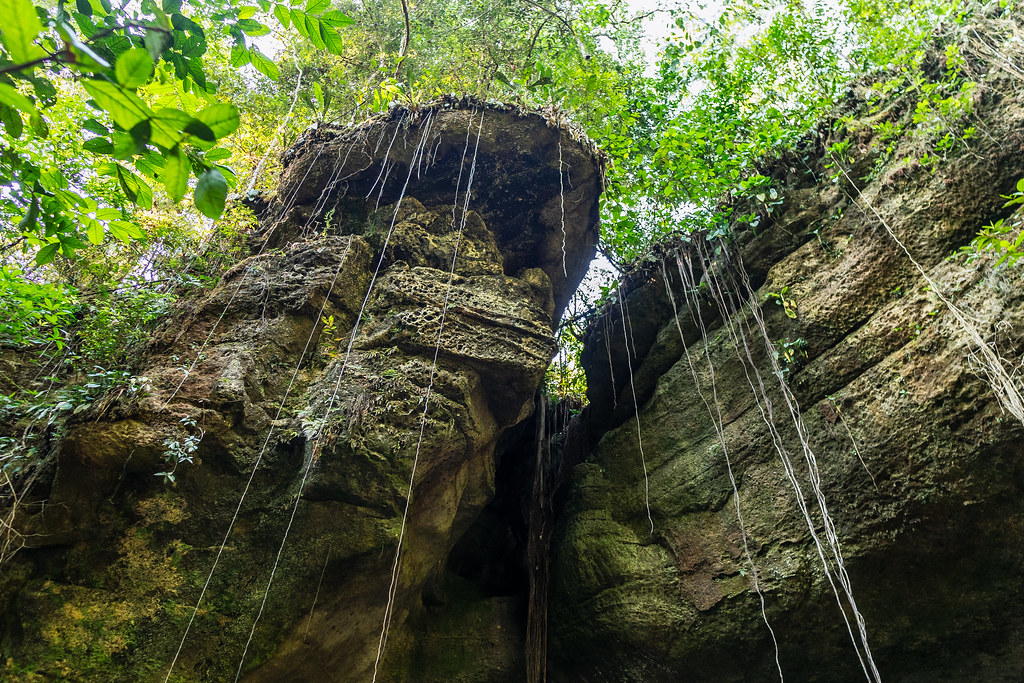
A different geological character from Maroaga. Gruta da Judéia is a sandstone grotto with a narrower entrance and a more intimate, labyrinthine atmosphere. The rock formations here tell a different chapter of the same ancient story — shaped by the same slow chemistry of water, pressure, and time, but into a space that feels more enclosed, more hidden. Aerial roots have worked their way through fissures in the ceiling, hanging down into the chamber like curtains.
Less visited than Maroaga, it rewards the traveller who chose an exploratory guide over a group tour. There are no signs telling you where to look. The guide navigates it from memory.
Stop 3 — Midday Break
Lagoa Cristalina — The Crystal Lagoon
The route pauses at Lagoa Cristalina — the Crystal Lagoon — a spring-fed natural swimming area set within intact forest. This is the midday stop: time to swim in clear, cool water, to eat, and to sit in the shade with the sounds of the surrounding forest. The water is transparent to the bottom, fed by underground springs that keep it consistently cold throughout the year.
The rhythm of the day slows here intentionally. After two cave visits in quick succession, the open sky and clean water of the lagoon are a welcome contrast. This is where the Amazon reminds you that rest is also part of the experience.
Stop 4 — River
Rio Vermelho — The Red River
Named for the amber and russet tones of its water — stained by the tannins of decomposing organic matter, the same chemistry that colours the Rio Negro black — Rio Vermelho is one of the clearest expressions of Amazonian black-water ecology in the region. The colour shift visible at the margins, where transparent current meets dark stone, has a quality that is simultaneously alien and logical once explained.
Your guide covers the biochemistry of black-water rivers: why they run clear but dark, how they shape the species communities that live in and around them, and why the plants and animals here are adapted differently from those in the white-water ecosystems downstream. The Amazon has multiple distinct hydrological worlds, and this is one of the most visually striking.
Stop 5 — Natural Pools
Piscinas Naturais do Mutum — Rock Pools in the Forest
Natural pools formed in sandstone by centuries of river erosion — calm, clear, and swimmable. The Piscinas do Mutum sit within a sheltered forest setting with graduated depths and a quality of stillness that makes them feel genuinely hidden, even in a valley this full of water.
Time here is unscripted. Some guests swim. Others sit on the warm rock and watch the forest edge. The guide is available for questions — about the species visible in and around the pools, the geology underfoot, or simply the name of a bird passing overhead. There is no agenda here beyond being in a remarkable place.
Stop 6 — Waterfall
Cachoeira do Mutum — The Main Falls
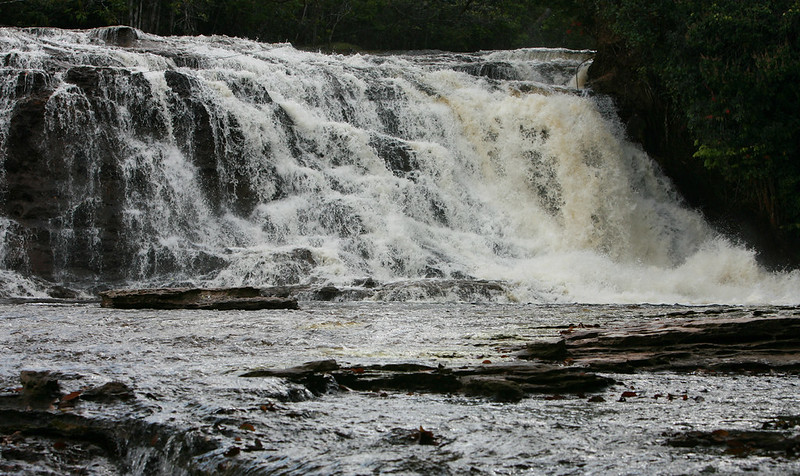
Cachoeira do Mutum is the signature waterfall of the valley. It drops over a broad ledge of red sandstone — the iron-rich substrate that gives Rio Vermelho its name — into a wide pool open to the sky, with primary forest tight on both banks. In the wet season, the volume is thunderous; in the dry season, the exposed rock formations become visible in their full geological detail. Both versions are worth seeing.
The waterfall is photographically generous from multiple angles and distances. Photo assistance is included — your guide knows the best positions for light at different times of the day and will help you get the frame you came for.
Stop 7 — Hidden Falls
Cachoeira do Escondidinho — The Little Hidden One
The day ends where the valley keeps its secret. Escondidinho — the Little Hidden One — sits at the end of a short trail that the guide navigates without signage. Finding it is part of the experience: it doesn't appear on the standard tourist maps, and reaching it requires knowing the way. Smaller and more intimate than Mutum, it falls into a deep pool sheltered by overhanging rock.
The pool is cold, deep, and quiet. After a full day in the valley, this last stop carries the particular quality of a place you have earned. The return to Manaus follows as the light changes over the forest — the same road that brought you out, now heading home.