
Four days in the forest
Day 1 — Departure
Manaus Market, Meeting of the Waters, Victoria-Régia & Lodge
The day begins early at the Manaus municipal market — the Adolpho Lisboa market, a nineteenth-century iron structure at the edge of the port, filled each morning with the produce of the entire Rio Negro basin. A guide walks the market before the heat rises: açaí, guaraná in its raw form, exotic fishes laid out on ice, baskets of jambu and tucumã, the medicinal roots and bark that Amazonian communities have used for treatment for generations. This is the city's connection to the forest laid out in material form, and it is worth an hour of anyone's attention.
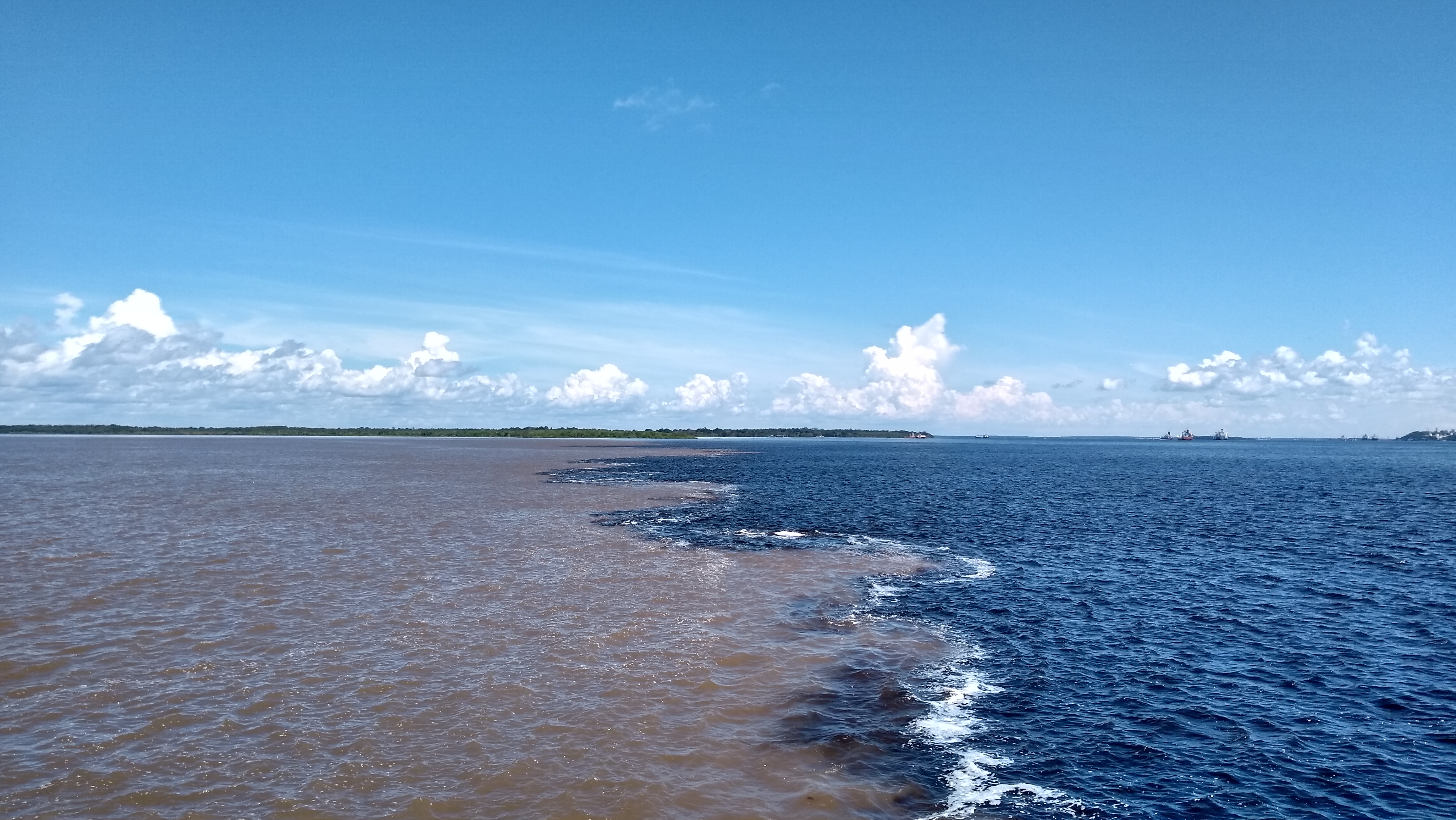
From the port, the route moves to the Encontro das Águas — the Meeting of the Waters, where the dark, tannin-rich Rio Negro and the pale, sediment-heavy Solimões travel side by side without mixing for approximately six kilometres. The chemistry, temperature, and density of the two rivers are too different for simple blending; from the water, the line between them is precise and strange.
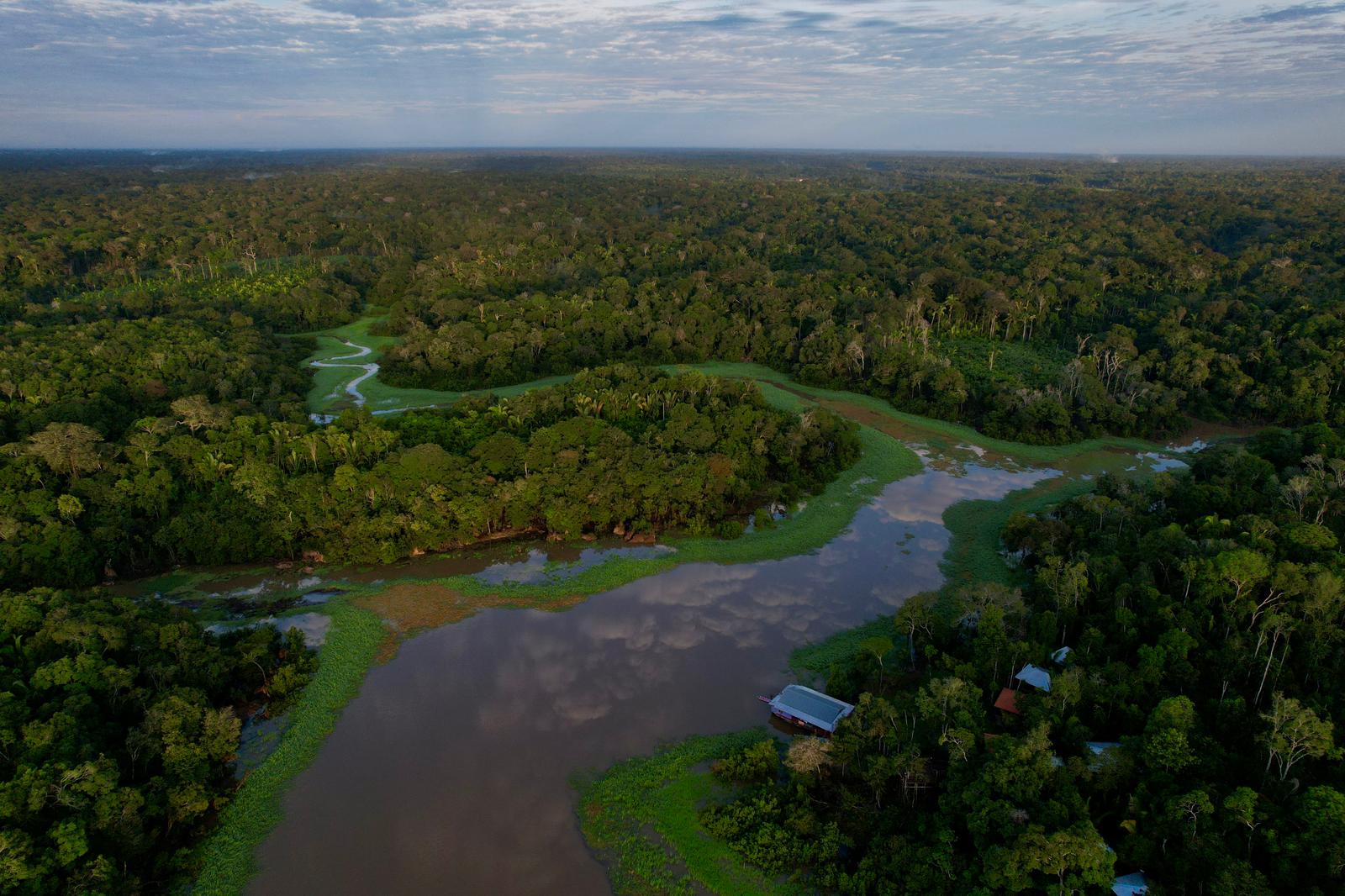
The afternoon continues to the Victoria-Régia habitat — the floating giant water lilies whose circular pads can reach two metres across, sustained by a complex architecture of radial ribs underneath that distributes the weight load with a structural elegance that influenced nineteenth-century greenhouse design. From there, the boat continues to the lodge: a property in primary Amazon forest, accessible only by river, surrounded by unbroken forest on all sides.
Day 2 — Deep Forest
Dawn Birding, Jungle Walk & Piranha Fishing
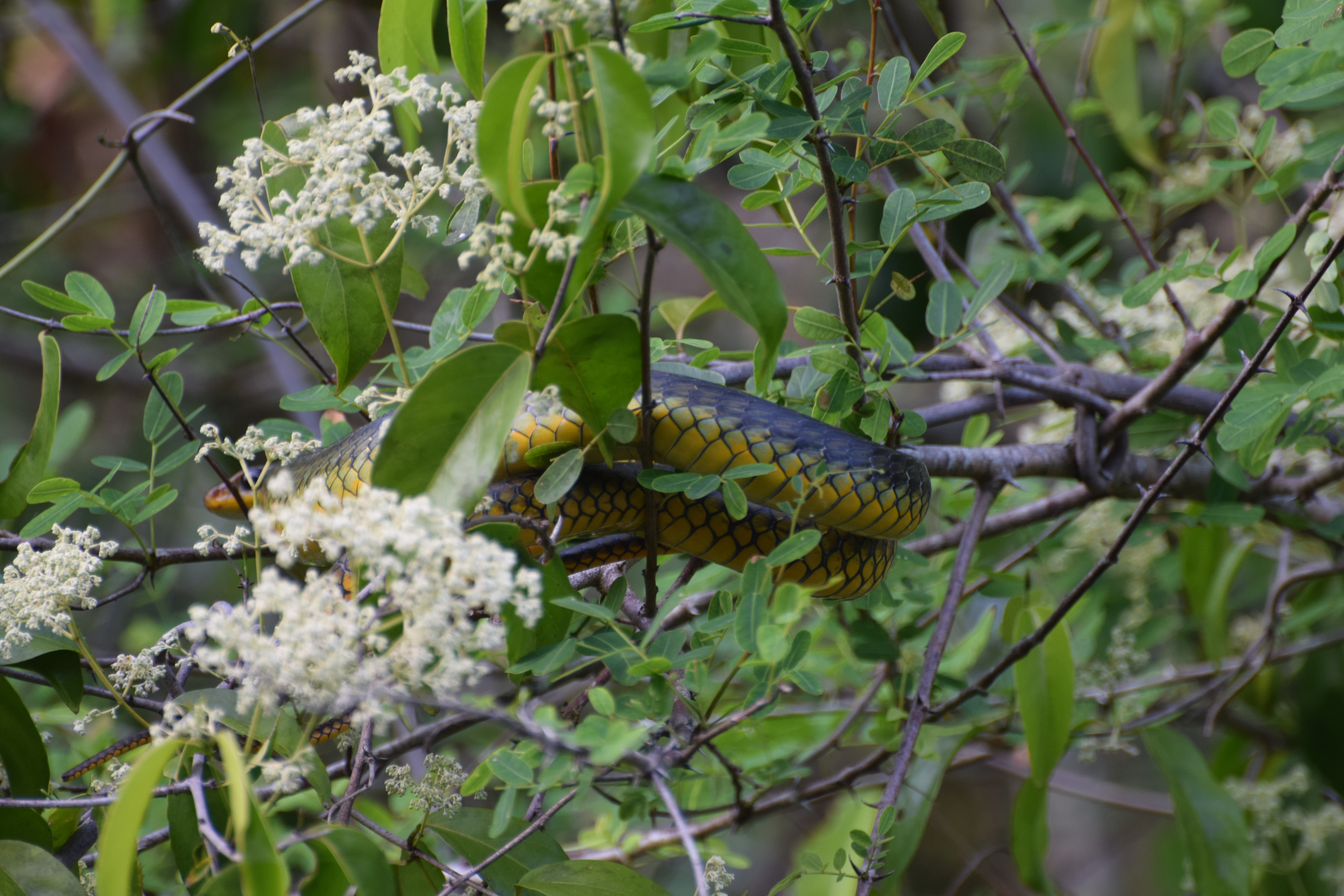
The second day begins before sunrise. The primary Amazon forest at dawn operates at a completely different pitch than at any other hour — the nocturnal layer is still active, the diurnal layer is just beginning, and the overlap between them produces a density of sound that no recording fully captures. A native guide leads the birding session on foot from the lodge, identifying species by call as well as sight. The lodge property falls within a zone where over 400 bird species have been recorded, including several that require primary forest to survive and cannot be found elsewhere.
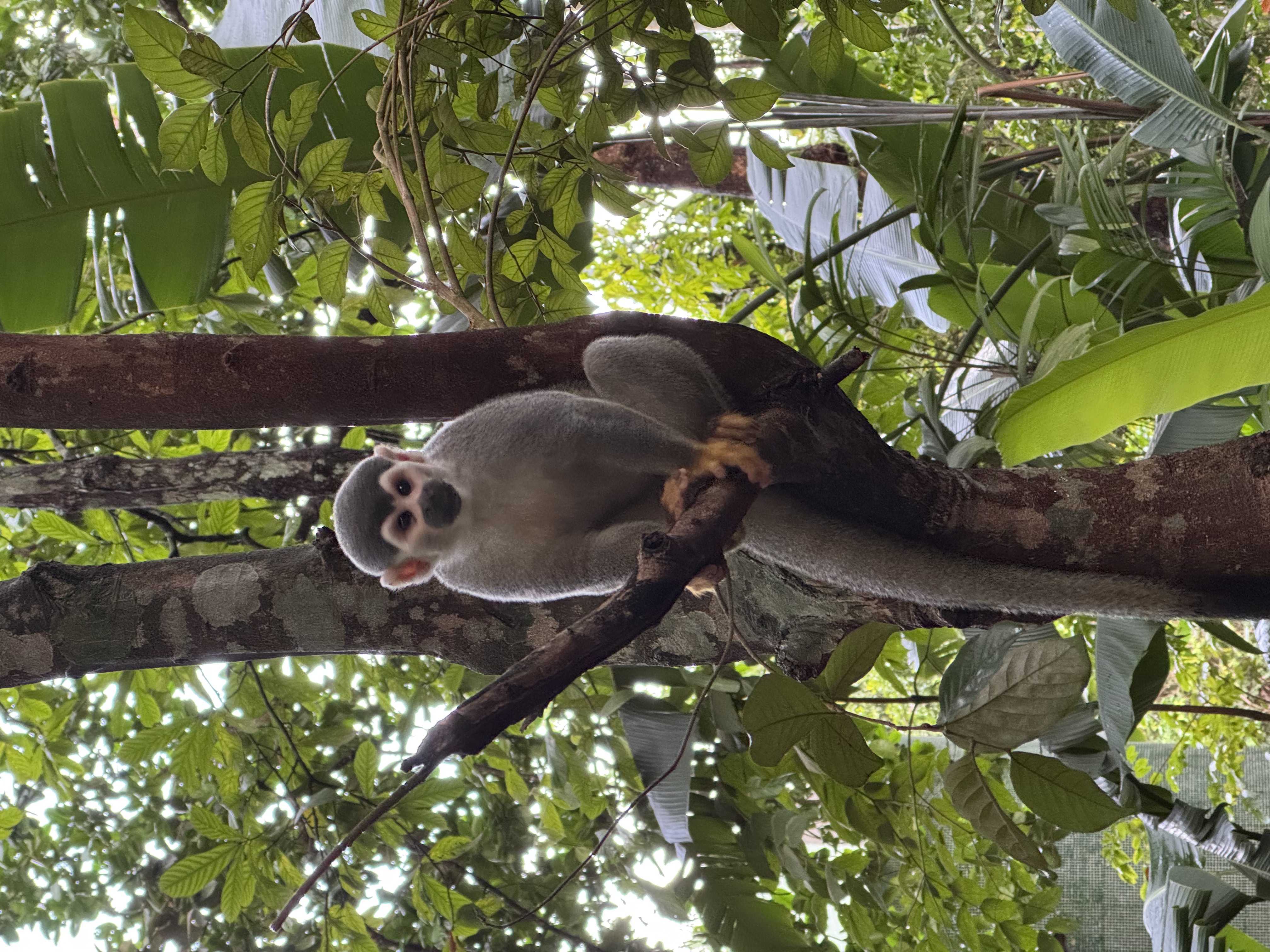
After breakfast, the group moves on foot into the surrounding primary forest — not on a prepared trail, but through the actual forest, reading the canopy and understorey with a guide whose knowledge of this terrain is direct and specific. The session covers plant identification, the logic of Amazonian biodiversity, animal tracking, and the ecological relationships between species that take years to understand fully but reveal themselves immediately to someone who grew up learning this forest as a language.
The afternoon descends to the river: piranha fishing from a canoe in the channels adjacent to the lodge, using traditional line and bait. As the light falls, the first evening at the lodge closes with a caiman search by spotlight along the river margins — moving slowly, reading the orange eyeshine of Caiman crocodilus among the roots and reed beds.
Day 3 — Culture & Camp
Caboclo Community & Night in the Jungle Camp
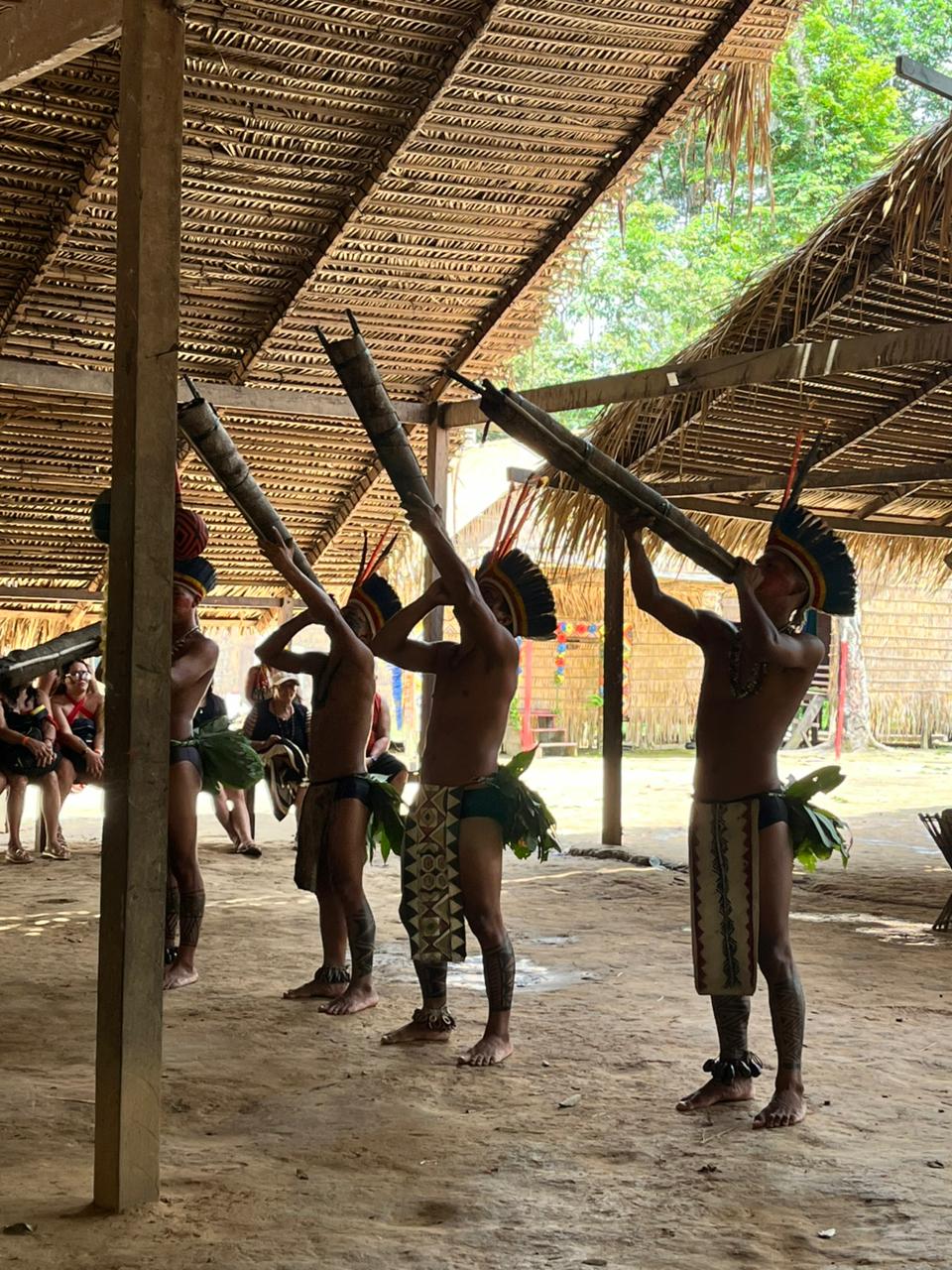
The third day moves away from the lodge and into the social landscape of the Amazon: a caboclo community visit. The caboclo culture — the riverine descendants of indigenous and Portuguese settler families — represents the dominant human presence in the Amazonian interior, and their way of life is shaped at every level by the river and the forest: the food they eat, the calendar they follow, the houses they build, the knowledge they carry. The visit is genuine and unscripted; the group sits with community members, shares regional food prepared with ingredients from the surrounding forest and water, and observes a way of life that has remained in productive relation with this ecosystem for centuries.
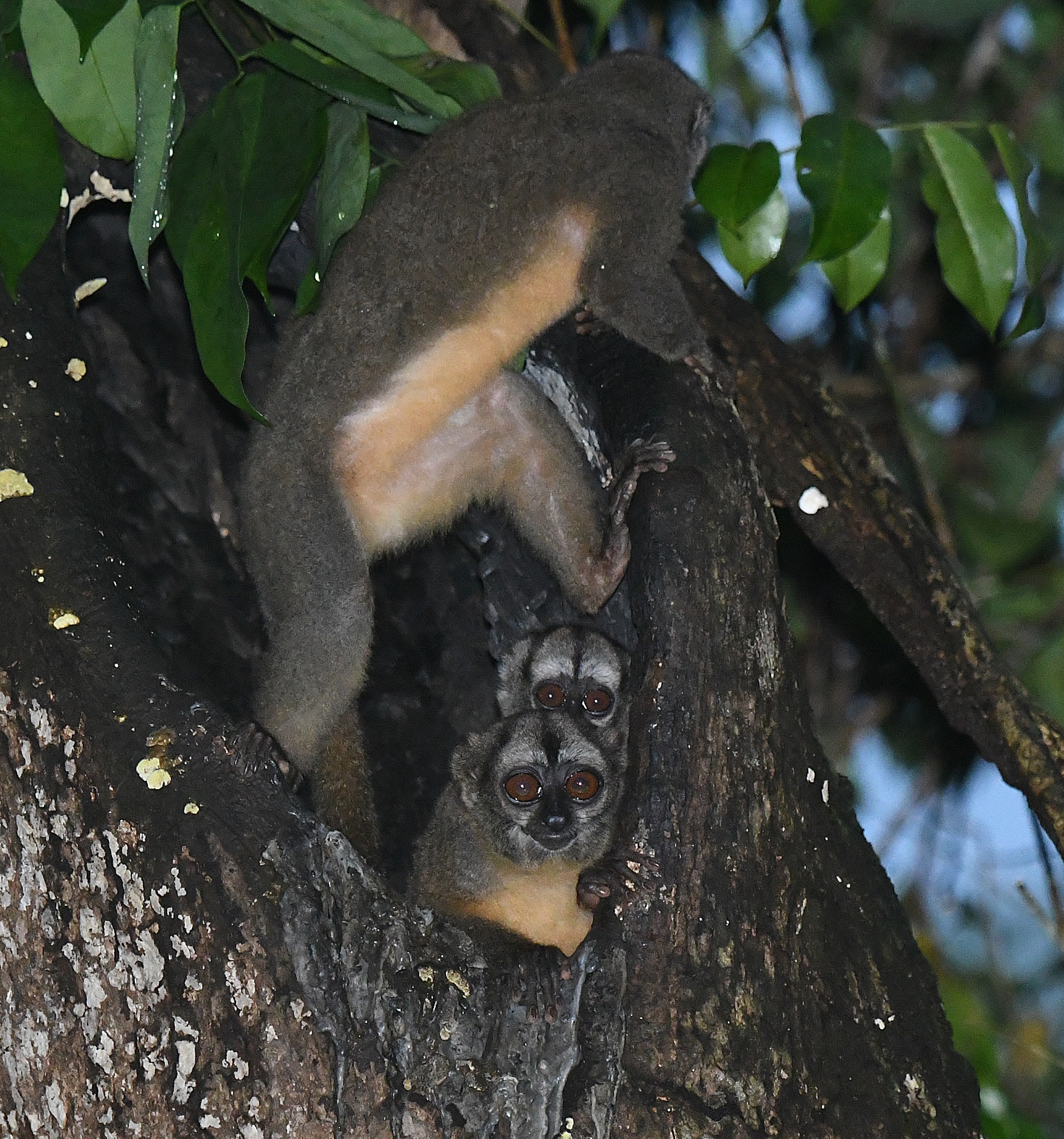
In the afternoon, the group moves deeper into the forest to the jungle camp: hammocks strung between trees in primary Amazon forest, a fire for cooking and light, and nothing else between the group and the Amazon night. The guide sleeps nearby, and the camp is safe — but the sounds of the nocturnal forest, the darkness, and the proximity of the canopy overhead are as complete as they can be. This is the night of the programme that most visitors remember longest.
Day 4 — Return
Igarapé Canoe & Return to Manaus
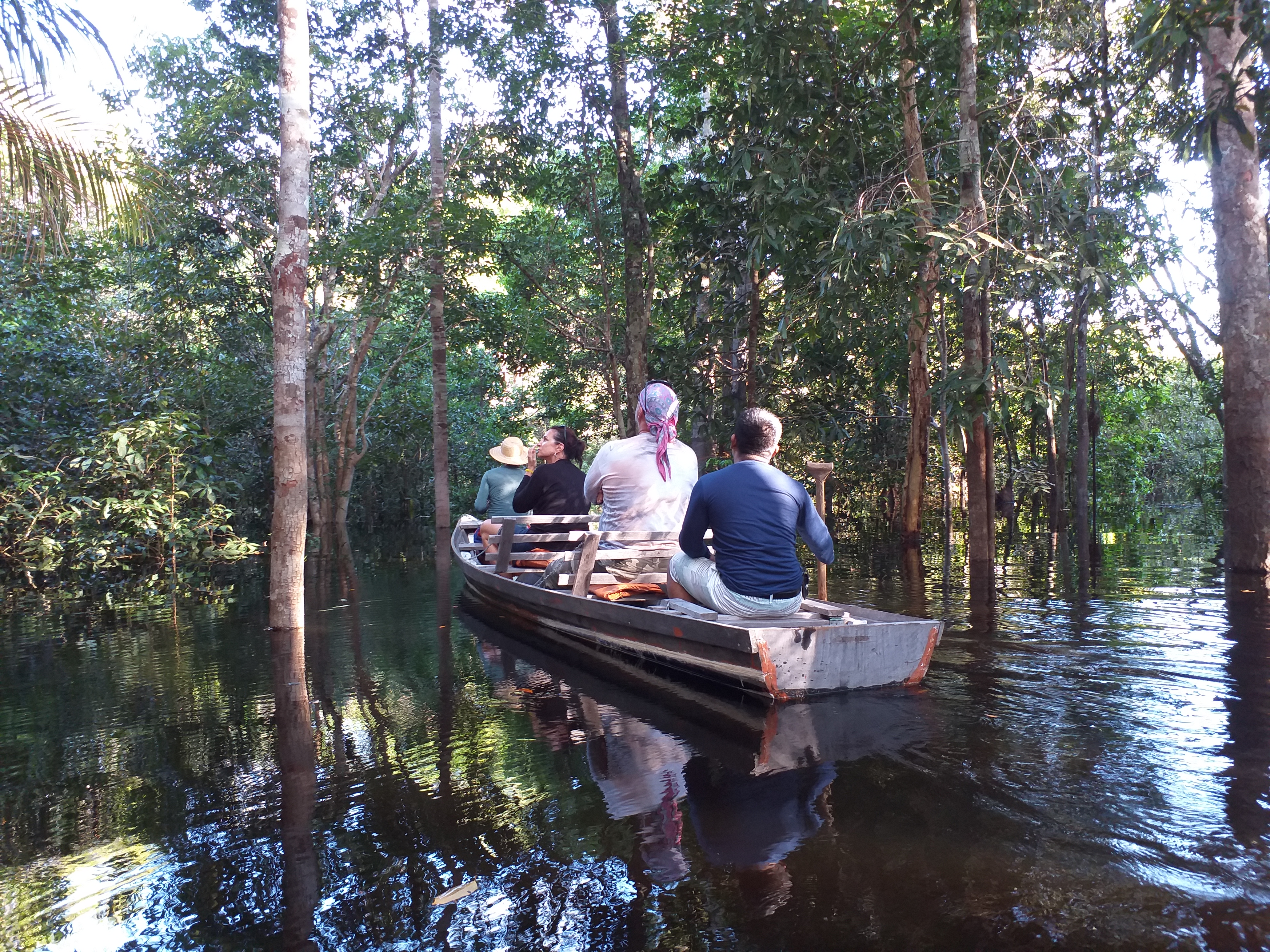
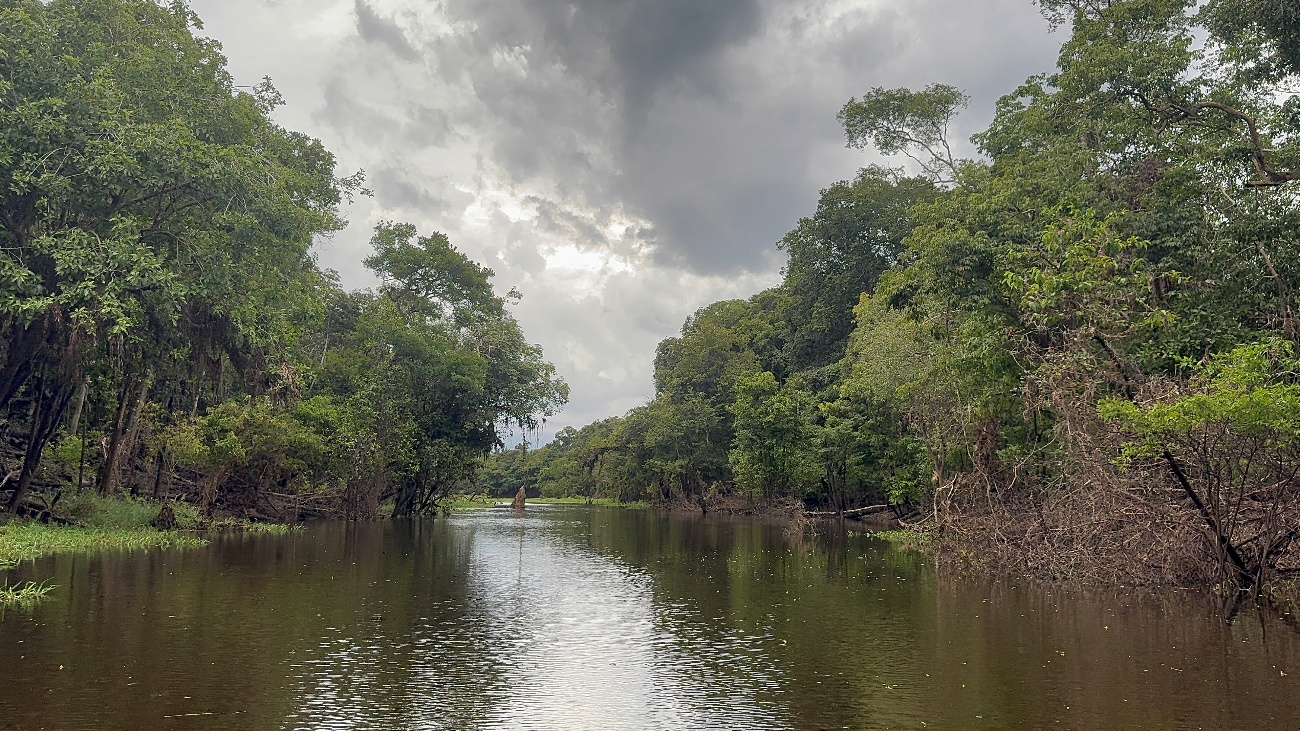
The final morning moves by canoe through the igarapé system — the narrow forest creeks that connect the main river to the interior of the forest, where the trees grow directly from the water during flood season and the light filters green through a canopy that meets overhead. The igarapé is a different environment from the open river: smaller, slower, darker, and full of species that do not appear in the main channel. The guide names what passes.
The return to Manaus follows the river network back to the city, with the landscape now legible in a way it wasn't four days ago. Drop-off at your Manaus hotel or the international airport, depending on your onward plans.