
How the day unfolds
06:30 — Departure
Hotel Pick-up & the Road to Novo Airão
The early start is deliberate. The 180 km drive from Manaus to Novo Airão takes roughly two and a half hours along the AM-352 highway — a route that traces the northern margin of the Rio Negro, passing through cerrado, secondary forest, and eventually the deep vegetation corridors that announce the heart of Amazonas state. An expert guide accompanies you from the first moment, and the conversation on that drive sets the tone for everything that follows. By the time the river comes into view at Novo Airão, the forest has already started to make its case.
~09:00 — Novo Airão
Pink River Dolphins — Inia geoffrensis
Novo Airão sits at the mouth of the Rio Jaú, where it meets the Rio Negro — and for decades, the boto dolphins of this stretch have associated the floating platforms here with food and curiosity. Inia geoffrensis is the largest freshwater dolphin in the world: up to 2.5 metres long, surprisingly intelligent, and coloured in shades of pink that intensify with age and excitement. This is an unscripted interaction — you enter the water, and the boto decide how close to come. Most come very close. The experience is consistently described by visitors as the most memorable part of their time in the Amazon, and that assessment is not difficult to understand when you are standing in the Rio Negro with a dolphin circling your knees.
10:30 — Anavilhanas Archipelago
Into the Island Labyrinth — Speedboat Navigation
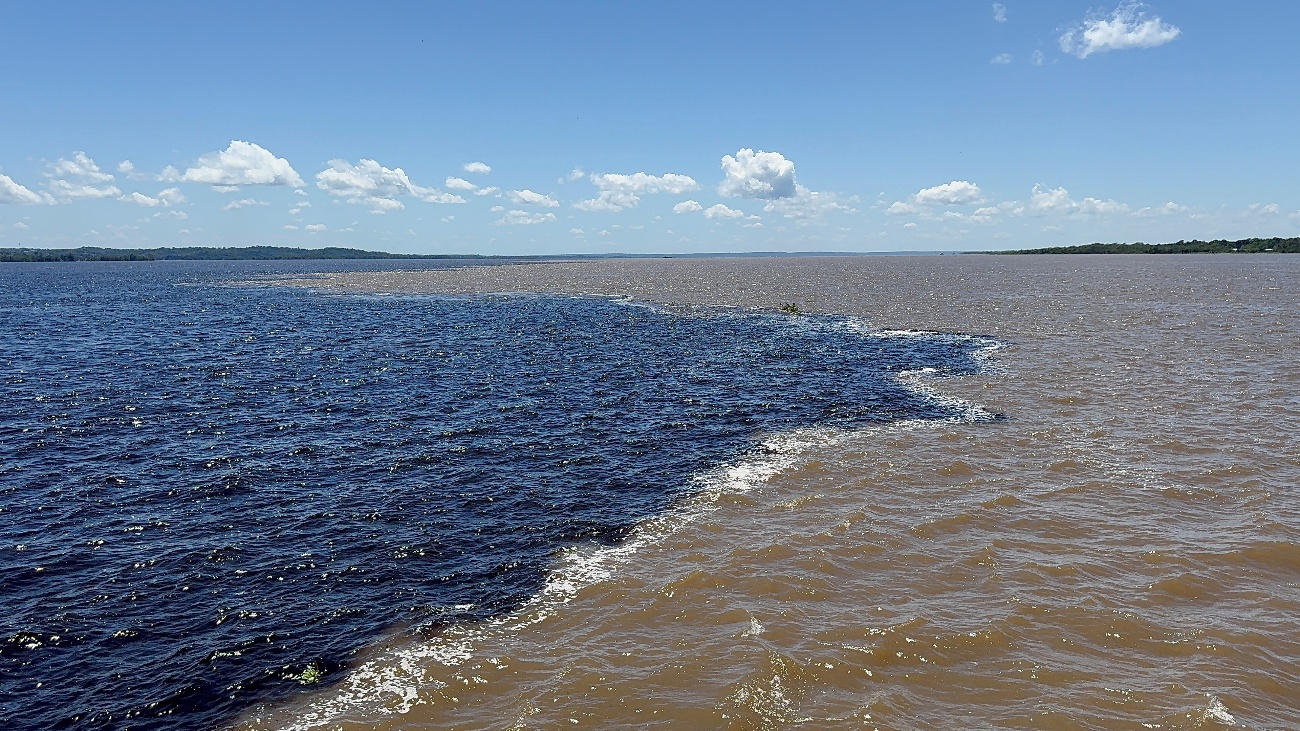
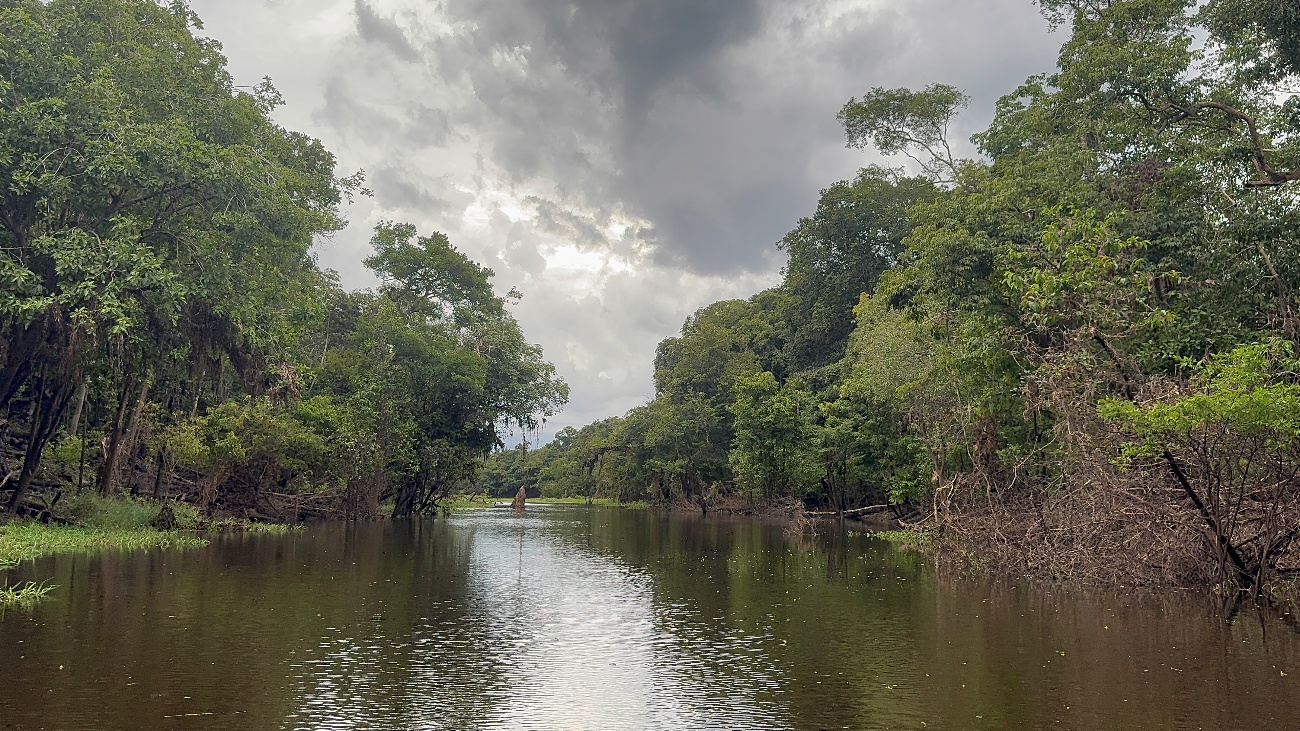
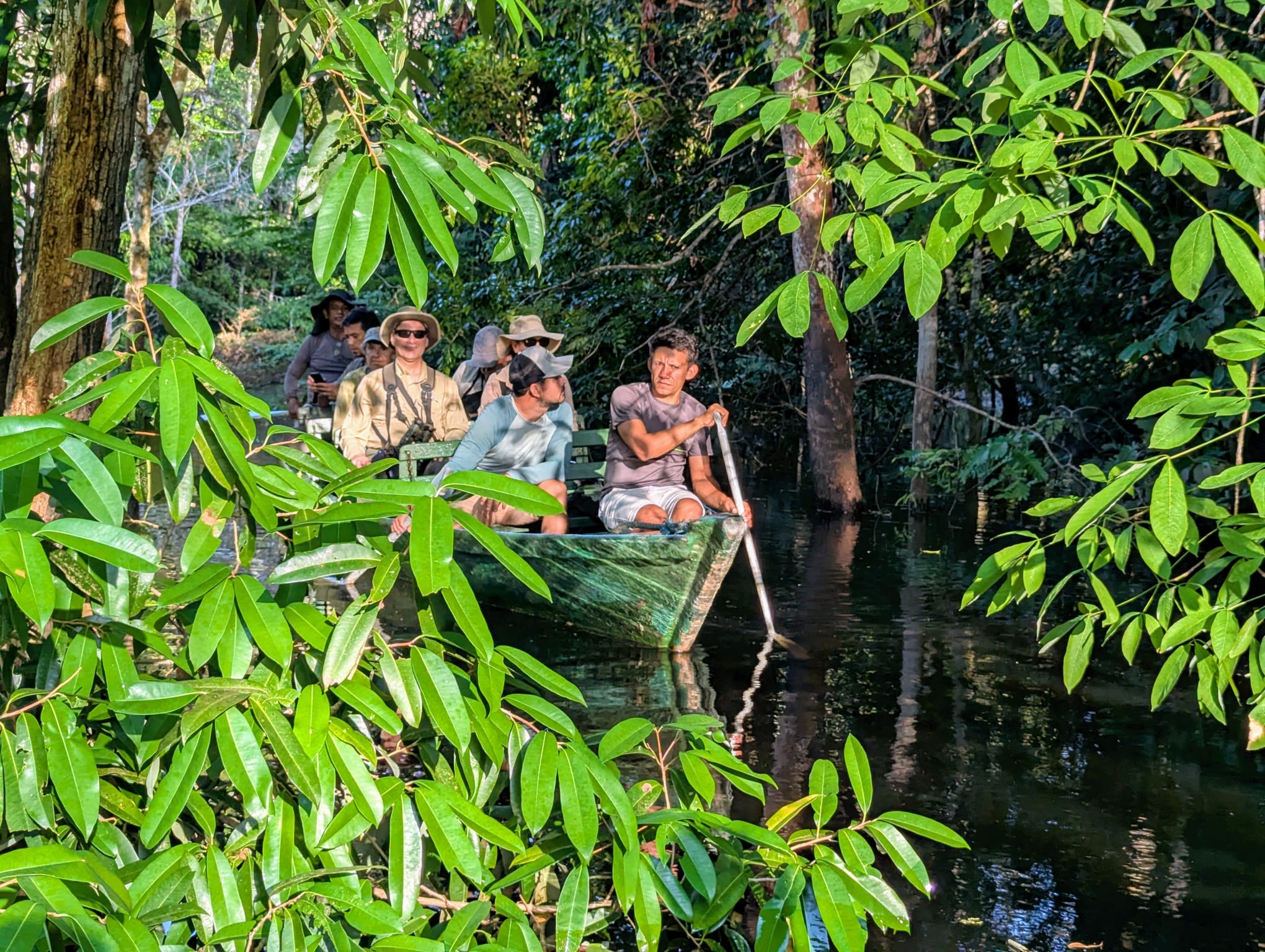
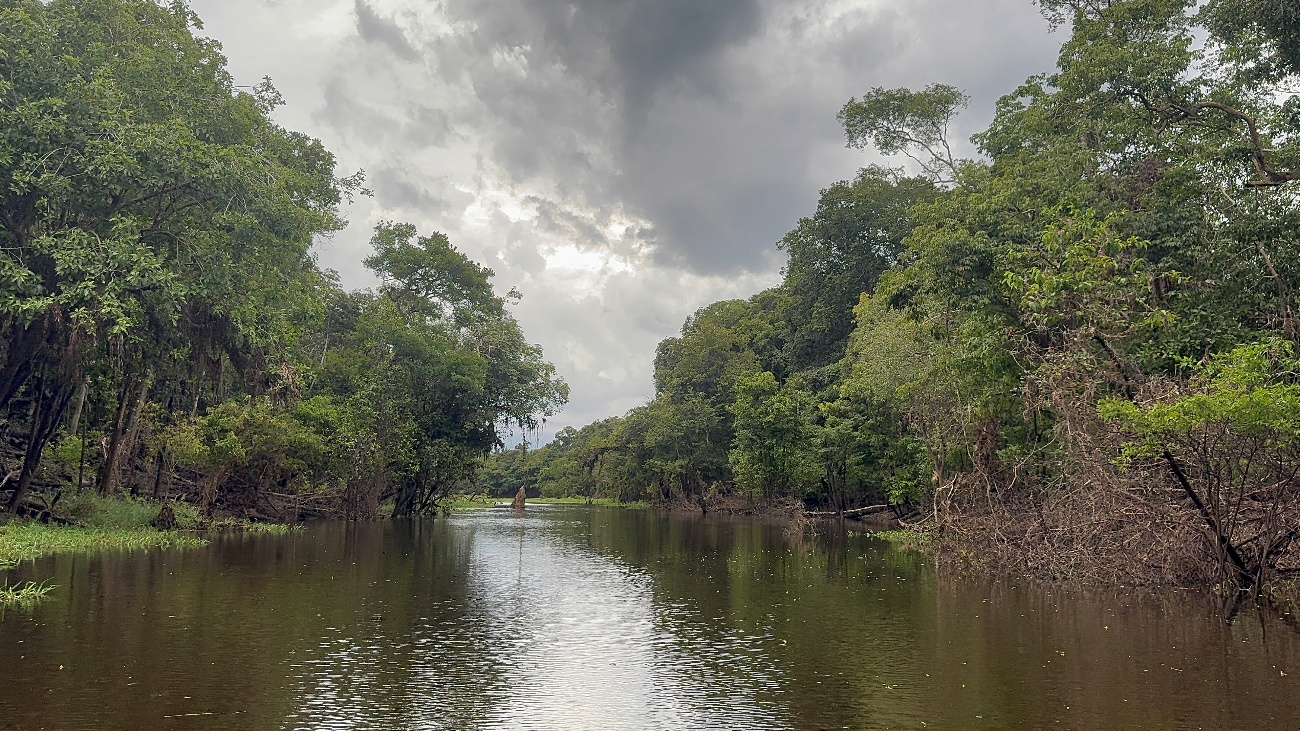
At 10:30, you board the speedboat and enter the Anavilhanas Archipelago proper. What the satellite image cannot prepare you for is the experience of being inside it: the Rio Negro divides and subdivides into channels that narrow, widen, and split again, with islands on every side — some forested to their waterline, others ending in clean river beaches. The water here is stained the colour of black tea by dissolved organic tannins from the forest floor, a phenomenon that makes the Rio Negro one of the most acidic large rivers in the world and, paradoxically, one of the warmest and clearest for swimming. The guide navigates through channels that most boats never enter, reading the current and the forest simultaneously.
Mid-morning
River Beaches, Lago do Arraia & Ancient Trees
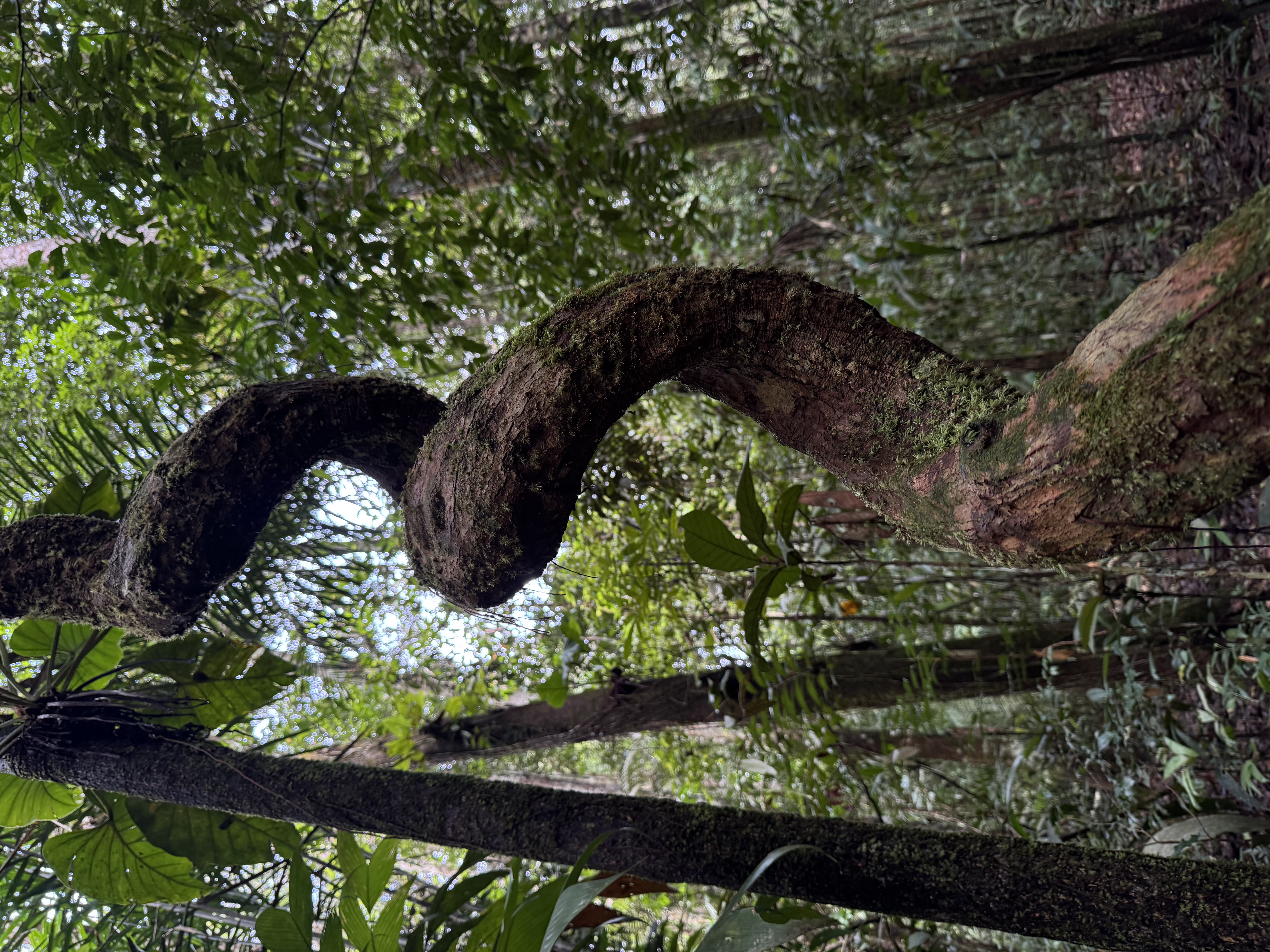
The navigation makes several stops. The river beaches — Praia de Santo Antônio, Tiririca, Praia do Meio, Praia do Pinheiro — are accessible only by boat, which is why they look the way they look: fine pale sand, dark water, no infrastructure, no other visitors. You swim here or simply stand in the shallows and take stock of where you are. The route also passes through the Lago do Arraia, an enclosed lake system where the stillness is absolute and the forested margins press close on every side. The ancient Amazonian trees along the banks — some centuries old, their root systems adapted to months of seasonal flooding — are among the most visually striking features of the entire day.
~13:00 — Midday
Regional Lunch & Riverside Community
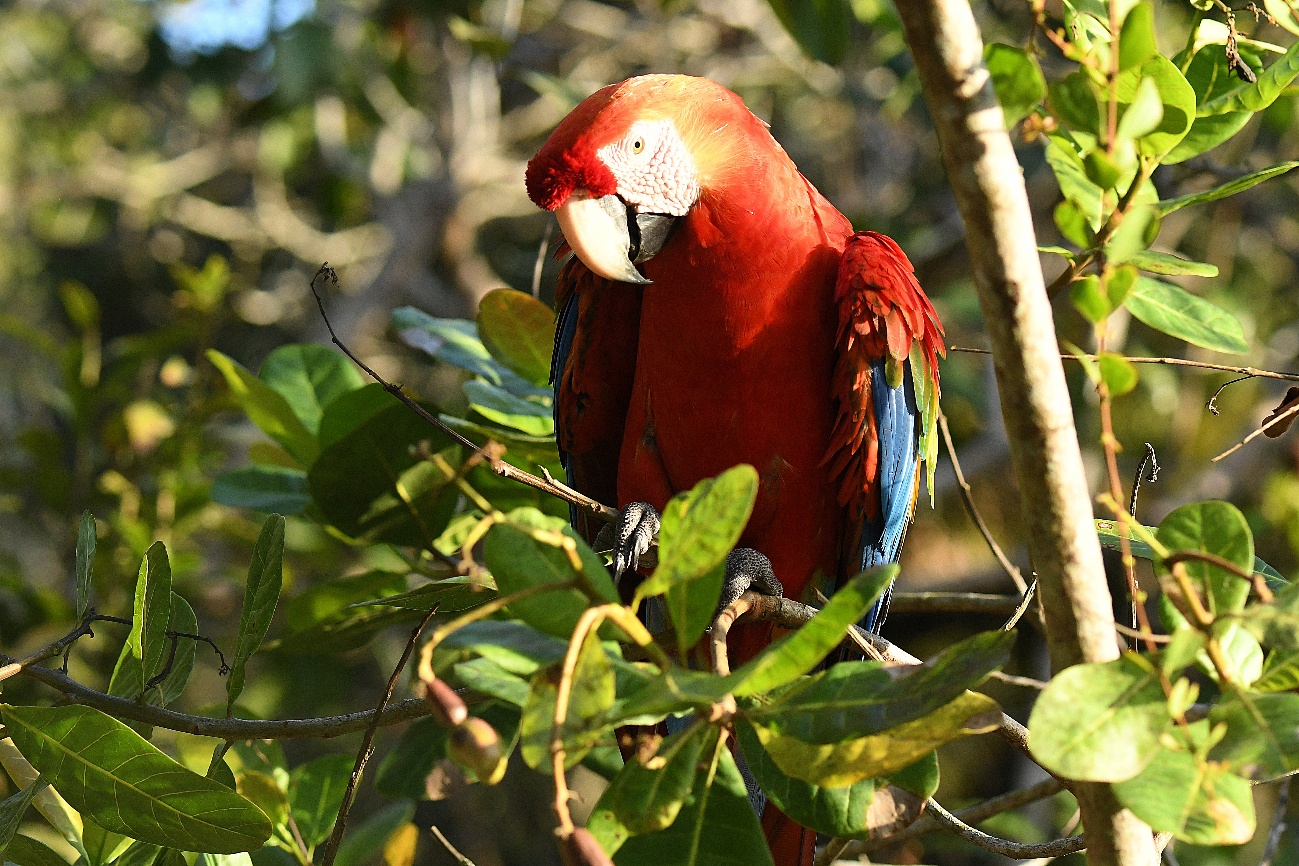
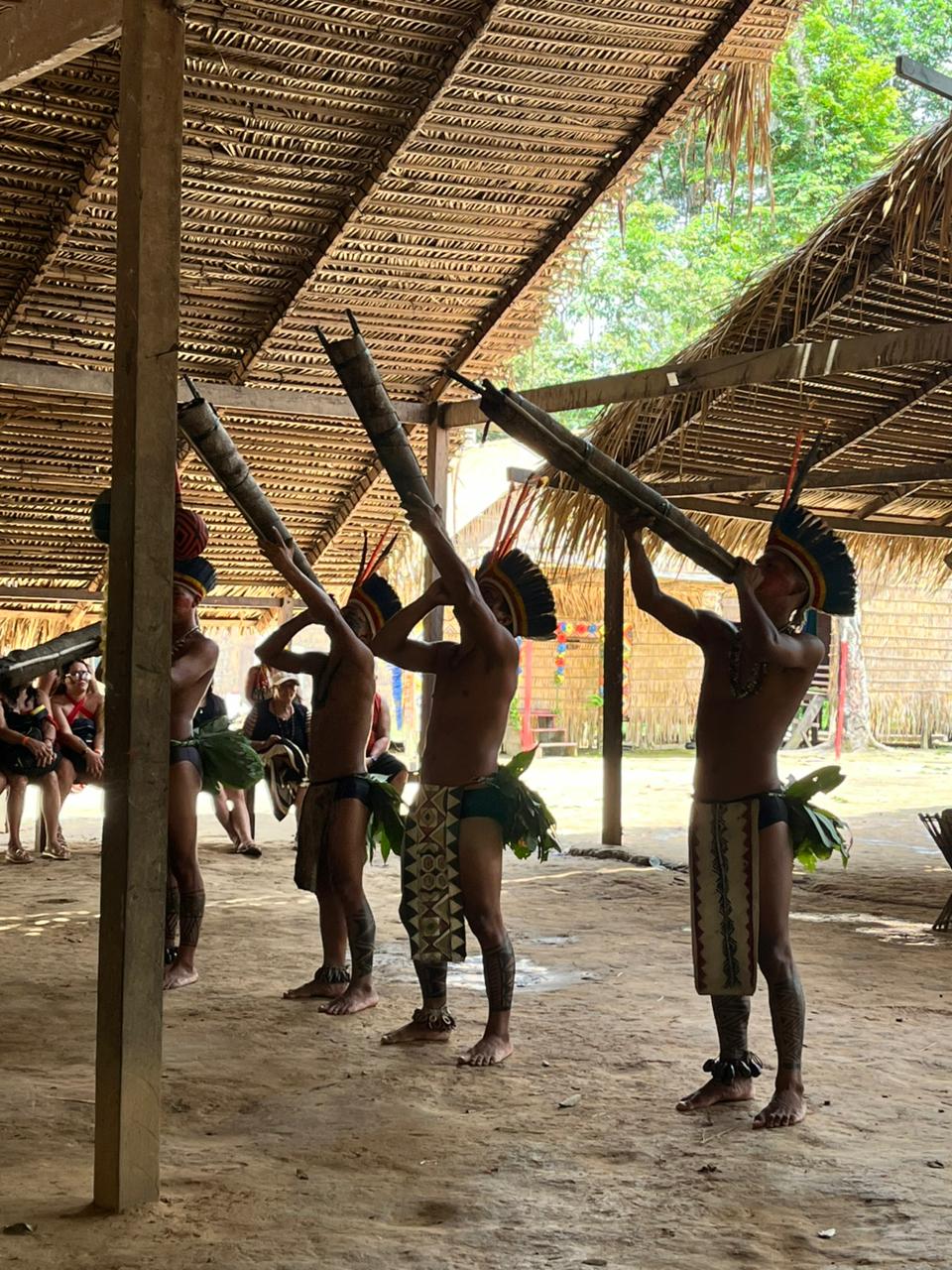
Lunch is served in a riverside community — one of the comunidades ribeirinhas that have sustained themselves along the Rio Negro for generations, with diets, architecture, and daily rhythms shaped entirely by the river. The meal is regional: freshwater fish prepared with local techniques, farinha, and whatever the kitchen has harvested that morning. This is not a staged cultural experience — it is lunch with people who live here, and the difference is immediately apparent. The occasion also creates the right conditions for birdwatching: the mid-afternoon quiet along the river margins tends to bring out herons, kingfishers, and occasionally the scarlet macaws that nest in the forest behind the community.
16:30 — Return
Back to Manaus by Evening
Departure from Novo Airão at 16:30. The return drive follows the same AM-352 highway as the morning, but the light is different — late afternoon in the Amazon turns the forest edges amber and the sky into something worth watching. You arrive back in Manaus around 19:30, in time for dinner. What you carry from the day is harder to quantify: the specific colour of the Rio Negro at full sun, the sensation of a dolphin close enough to touch, the scale of an archipelago that has no roads and no crowds and does not need them.