
How the day unfolds
09:00 — Morning
Departure & Meeting of the Waters
The speedboat departs Manaus at 09:00, heading downriver toward one of the most remarkable natural phenomena in the Amazon basin. At the Meeting of the Waters, the dark, tannin-rich Rio Negro and the pale, silty Solimões run alongside each other for kilometres without mixing — different temperatures, different densities, different aquatic worlds held in tension by the physics of fluid dynamics. Your naturalist guide explains why this boundary persists, and what lives on each side. It is a sight that stops people mid-sentence the first time they see it from the water.
Mid-morning
Janauarí Ecological Park — Flooded Forest
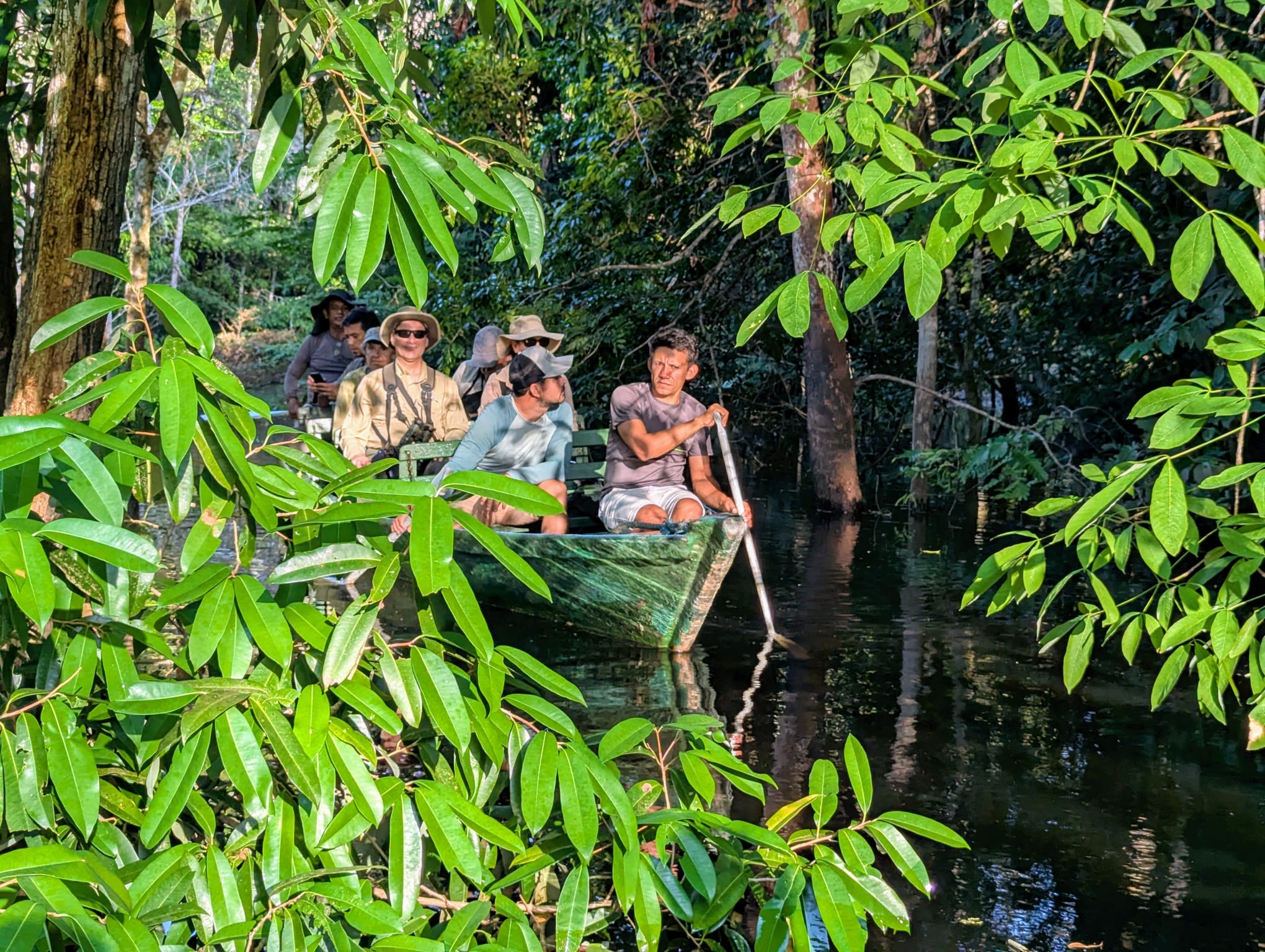
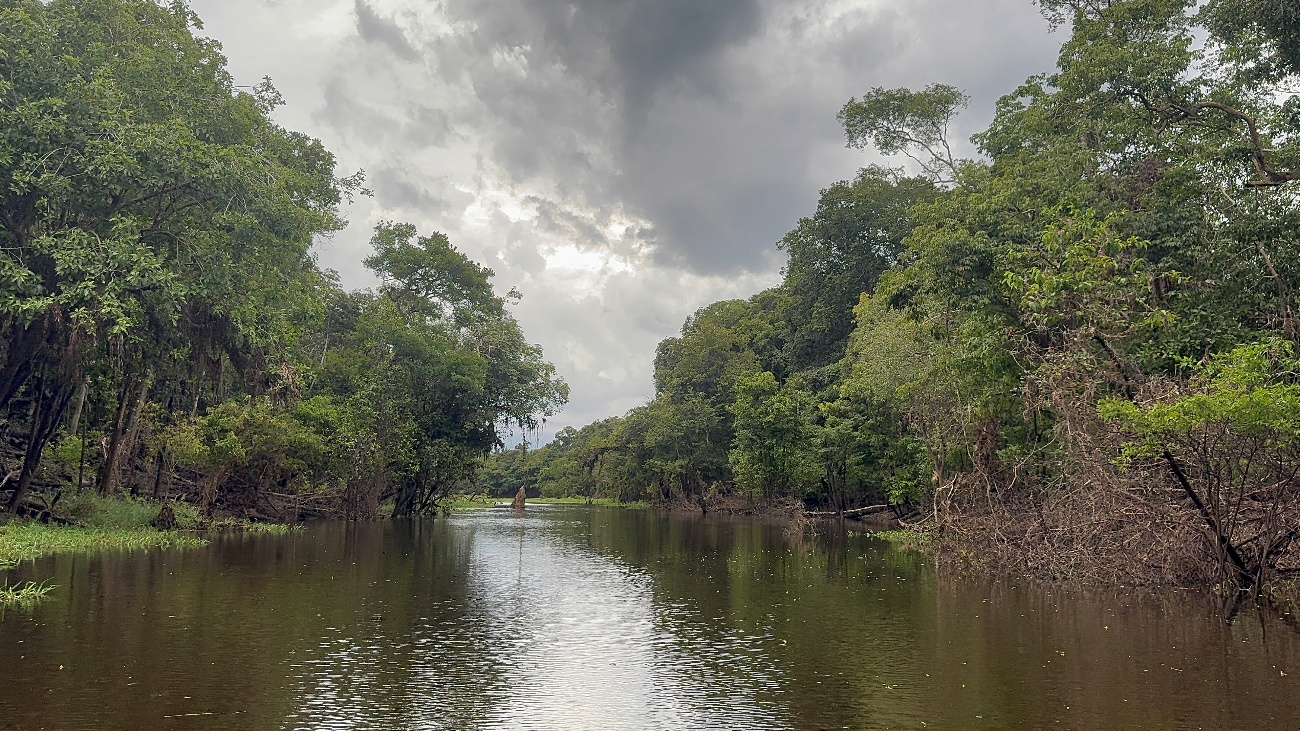
Entering Janauarí, the river gives way to igapó — seasonally flooded forest where the water rises high enough to submerge the trunks of trees that have adapted to months of immersion. The boat moves slowly through narrow channels, past clusters of Victoria amazonica water lilies with leaves spanning over a metre wide. Elevated walkways allow you to look across the flooded canopy at eye level, where wild monkeys move between branches and macaws cross the open water between emergent trees. Below the walkways, stilt houses are home to local artisans whose handicrafts — carved wood, seed ornaments, woven textiles — represent a material culture shaped entirely by the forest around them.
Midday
Regional Amazonian Lunch
Lunch is served at a local riverside community — a meal of fresh Amazonian fish grilled over open fire, manioc preparations, regional fruits, and dishes that exist nowhere else. The recipes are passed down through generations of families who have lived along these rivers for centuries. It is the kind of meal that is easy to underestimate from a description and difficult to forget once eaten. The setting — open-air, on the water, in the company of people who call this place home — is as much a part of the experience as the food itself.
Afternoon
Pink River Dolphin Habitat
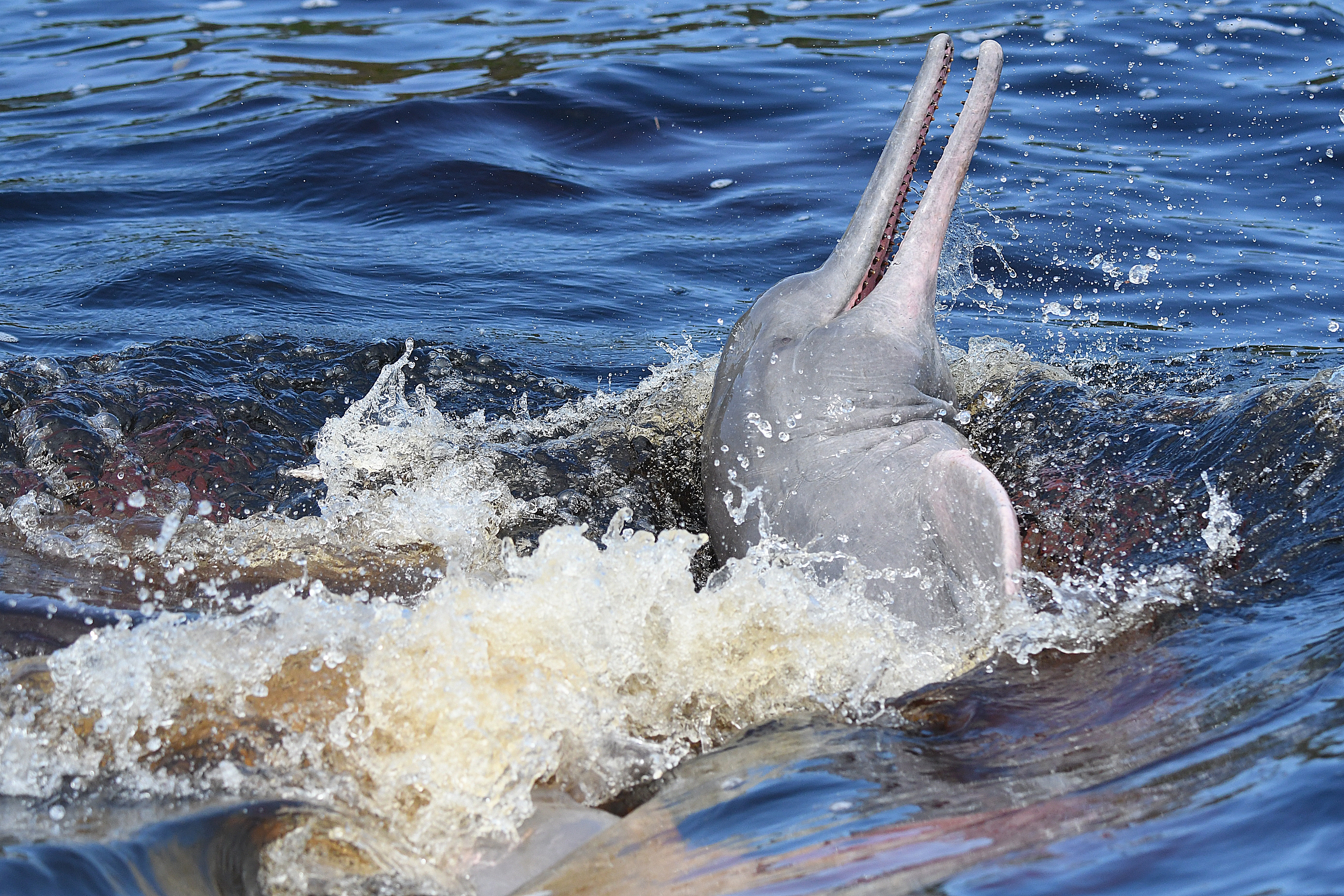
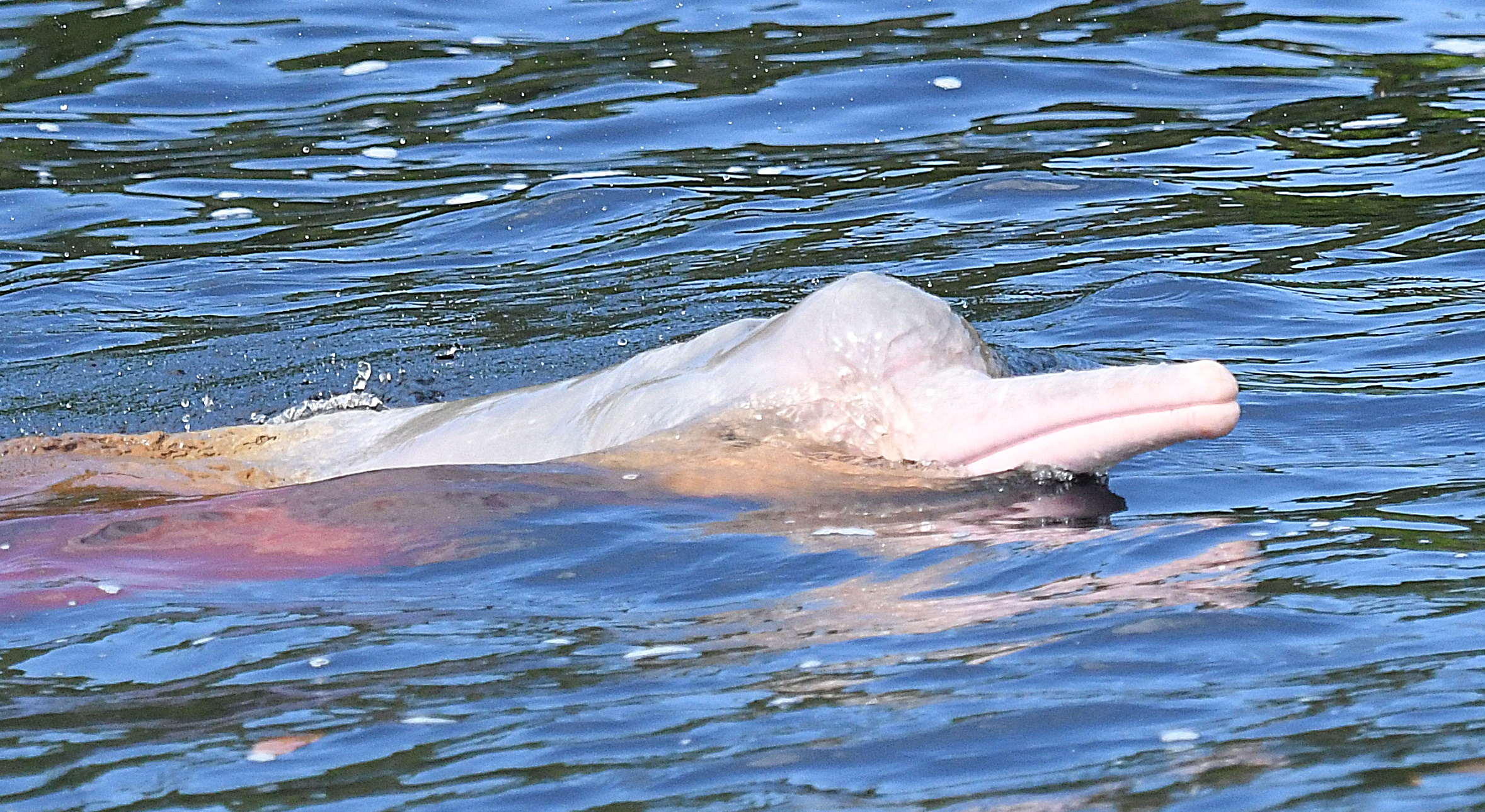
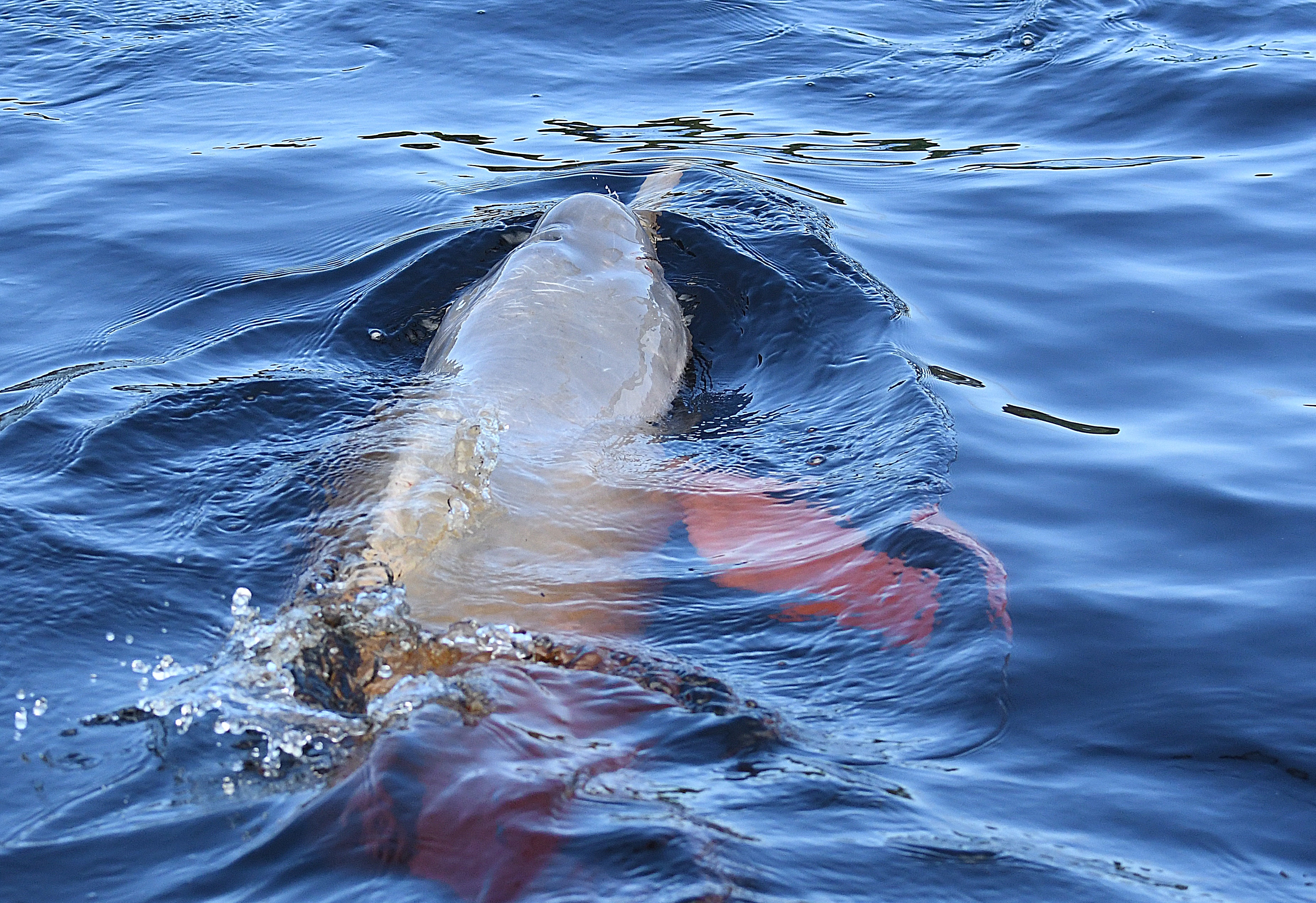
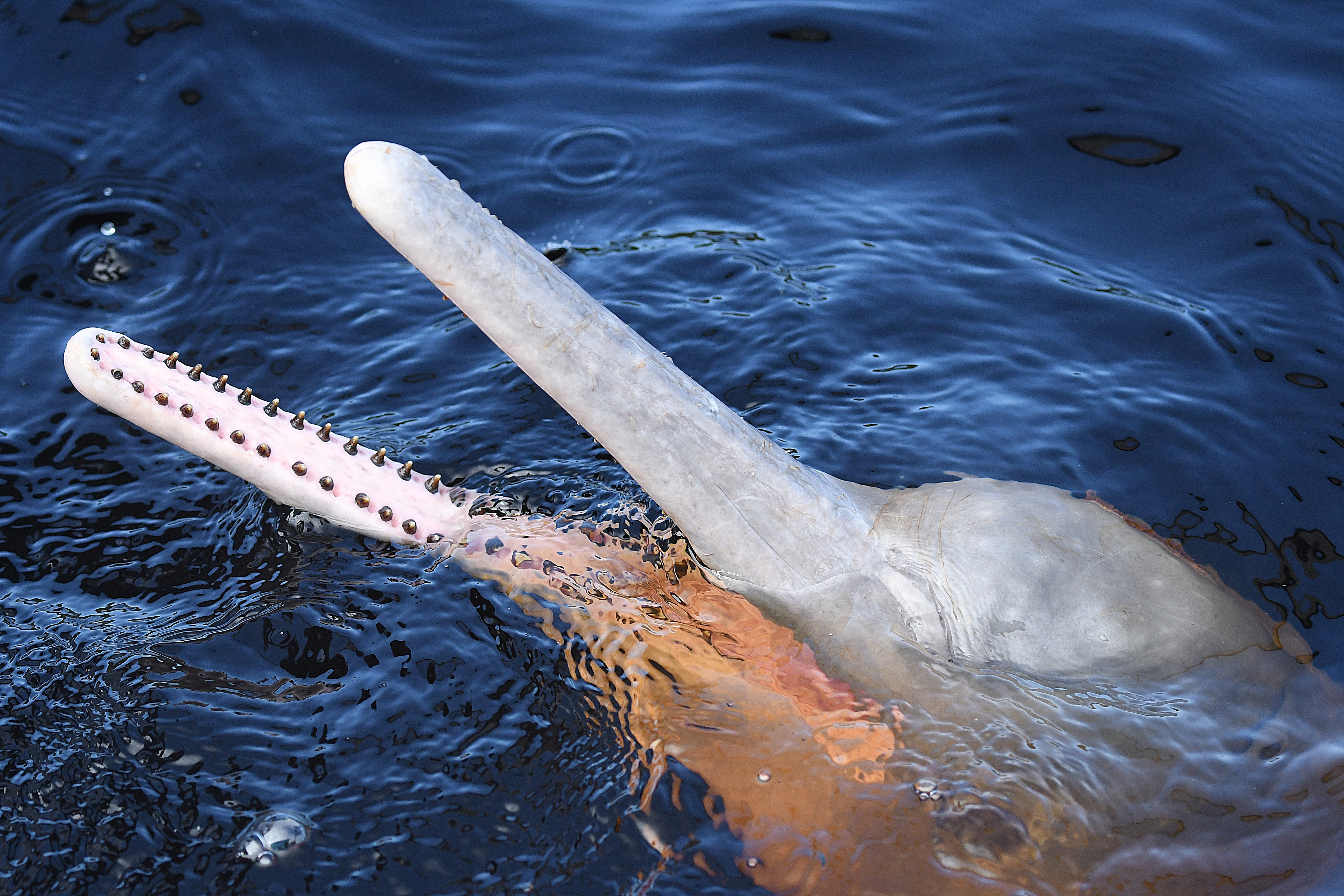
The pink river dolphin — Inia geoffrensis, the largest freshwater dolphin on earth — is one of the most singular animals in the Amazon. These are not trained or captive animals: any close approach depends entirely on the dolphins' own pace, curiosity, and local environmental rules. The pink colouration deepens with age and excitement; an adult can reach 2.5 metres and move with surprising speed in dark, shallow water. In warm Rio Negro water, the experience is quiet and unhurried, focused on respect, observation, and the natural behaviour of the animals. Your naturalist guide remains with the group throughout.
Late Afternoon
Indigenous Village & Return to Manaus
The final stop is a visit to a local indigenous community — an opportunity to engage with traditions, customs, and ecological knowledge that have shaped life in the Amazon for thousands of years. Demonstrations of traditional crafts, medicinal plant knowledge, and river-based skills offer a perspective on this landscape that no amount of boat travel can provide on its own. The return journey to Manaus follows the river in the late afternoon light, the water broadening as the city reappears across the horizon. You will be back in Manaus in time for dinner, the day complete.